




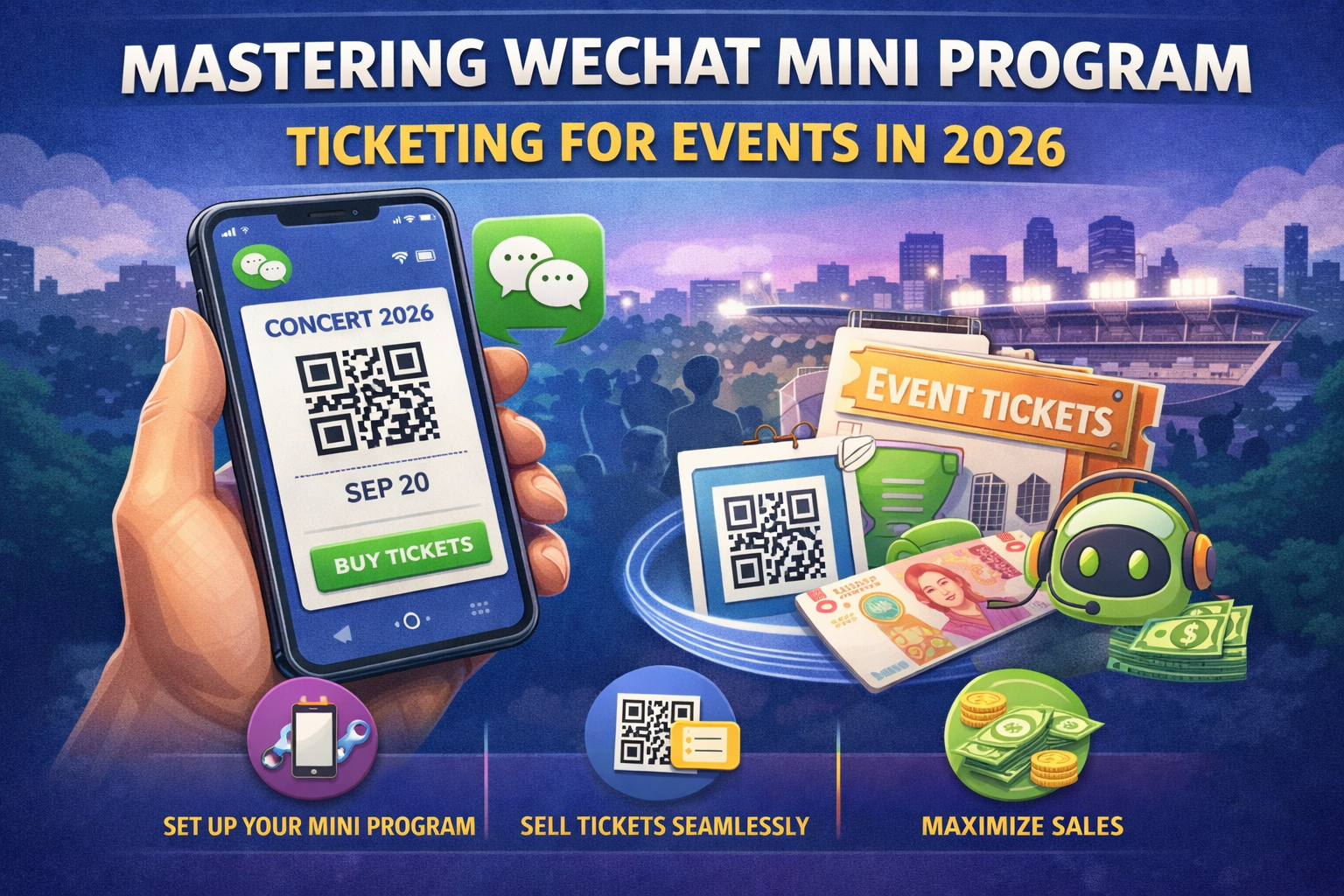
WeChat mini program ticketing events provide a frictionless experience by combining ticket discovery, payment, and entry within a single app that requires no separate download.
In practice, the traditional way of buying tickets through a website or a native app feels like ancient history. Let’s be honest: nobody wants to download a 100MB application just to attend a one-night concert. This is where wechat mini program ticketing events take the lead. These lightweight “sub-apps” live inside the WeChat ecosystem, loading in under a second and using minimal phone memory.
That means your audience stays inside the environment where they already talk to friends and pay for coffee. Because the user’s identity and payment details are already linked, the checkout process often takes less than ten seconds. For example, major platforms like Damai and Maoyan have seen conversion rates skyrocket because they removed the “registration wall” that kills most web-based sales.
| Feature | Native App | Standard Website | WeChat Mini Program |
|---|---|---|---|
| Initial Friction | High (Download/Install) | Medium (Login required) | Zero (Instant launch) |
| Payment Speed | Moderate | Slow (External gateway) | Instant (WeChat Pay) |
| Social Sharing | Low | Low (External link) | High (In-chat cards) |
Setting Up Your Ticketing Engine in 2026
Successful event organizers must register their Mini Program with the MIIT and link it to a verified WeChat Pay merchant account to process transactions.
Getting started isn’t just about coding; it is about compliance. In the current 2026 regulatory environment, every wechat mini program ticketing events portal must complete an MIIT filing (Beian). If you skip this step, Tencent will deactivate your program without warning. Here is how you move the needle from idea to a live sales page:
- Merchant Verification: You need a Chinese business license or a verified overseas “WeChat Pay Global” account. This ensures you can actually collect the money.
- Real-Name Integration: Security is tight. Your system must support “Real-Name Ticketing,” where buyers input their ID or passport numbers. This effectively kills the secondary “scalper” market.
- API Connectivity: Connect your Mini Program to WeChat’s “Official Account” so you can send push notifications about seat availability or event delays.
In simple terms, you are building a bridge between your inventory and the user’s wallet. For example, a mid-sized music festival in Shanghai recently used “Subscription Messages” within their Mini Program to alert 5,000 waitlisted fans the moment extra tickets were released. The result? They sold out in four minutes without spending a cent on external ads.
The Social Fission Strategy: Turning Buyers into Promoters
Social fission leverages the “Group Chat” culture of WeChat to drive viral ticket sales through referral discounts and group-buy incentives.
Think of your Mini Program like a digital campfire. People don’t just want to buy a ticket; they want to invite their friends to sit with them. To make this work, you have to “flesh out” your sharing features.
A common mistake is just putting a “Share” button at the bottom. In practice, the winners in 2026 use “Group-Buy” (Pin Tuan) mechanics. Here’s why: if a user sees they can get 15% off by inviting two friends to buy tickets simultaneously, they become your most effective salesperson. This isn’t just theory; platforms like ShowStart use this to generate up to 40% of their total traffic through peer-to-peer sharing.
That means your Mini Program should generate a “Share Card” that looks like a beautiful invitation, not a boring link. When someone shares this into a group of 500 people, the visual impact does the heavy lifting for you.
The Hidden Truth: Why a Great Mini Program Still Fails
Most event failures stem from ignoring “Shadow Traffic” and failing to integrate the Mini Program into private community groups after the initial purchase.
Let’s cut to the chase: having a shiny Mini Program is useless if nobody knows it exists. Many global brands fall into the trap of thinking “if I build it, they will come.” In reality, the most successful wechat mini program ticketing events are powered by “Private Traffic” (SCRM).
The secret sauce isn’t the sales page; it’s the post-purchase flow. When someone buys a ticket, they should be immediately prompted to join an “Event Community Group” via a QR code displayed on the confirmation page. This turns a one-time transaction into a long-term relationship.
Here is why this matters. If you have a group of 300 ticket holders, you can “drip-feed” them content—artist interviews, venue maps, or pre-ordered merchandise—directly in the chat. This builds “Social Currency.” People feel like insiders, and insiders are the ones who post photos on their Moments, giving you free organic reach that no paid ad can match.
Navigating Challenges for International Organizers
International brands must overcome language barriers and cross-border payment nuances by using professional translation services and ensuring compatibility with foreign credit cards.
If you are a global brand hosting an event in China, there are specific hurdles you will face. For example, while WeChat Pay now supports many international Visa and Mastercard options, not every individual Mini Program is configured to accept them.
You must ensure your backend payment provider is “Overseas Friendly.” Additionally, do not rely on automated browser translation. Chinese users are sensitive to tone. If your ticketing interface feels clunky or uses weird “AI-translated” phrasing, they will lose trust. Use professional localization to ensure the “copy” sounds native and encouraging.
Another critical point: local phone numbers. Many Mini Programs require a (+86) number for verification. If your event attracts international tourists, you must implement a “Passport/Email” login alternative. Failure to do this effectively locks out a high-spending segment of your audience.
Frequently Asked Questions
How much does it cost to build a ticketing Mini Program?
While a basic template can cost around $2,000, a custom enterprise-level solution for major events typically ranges from $10,000 to $50,000 depending on real-time seat selection and high-concurrency needs.
Can I sell tickets to people outside of China?
Yes, but you must use a WeChat Pay Global account and ensure your Mini Program’s user interface supports English or other relevant languages to reduce friction for foreign users.
Is it possible to integrate my existing CRM with WeChat?
In practice, yes. You can use APIs to sync your WeChat user data with external platforms like Salesforce or HubSpot, allowing you to track the entire customer journey from the first click to the final check-in.
How do I handle ticket refunds on the platform?
The platform allows for automated refund workflows through the WeChat Pay API. However, most organizers set strict “No-Refund” or “Refund-before-72-hours” rules which must be clearly stated in the Mini Program’s Terms of Service.