




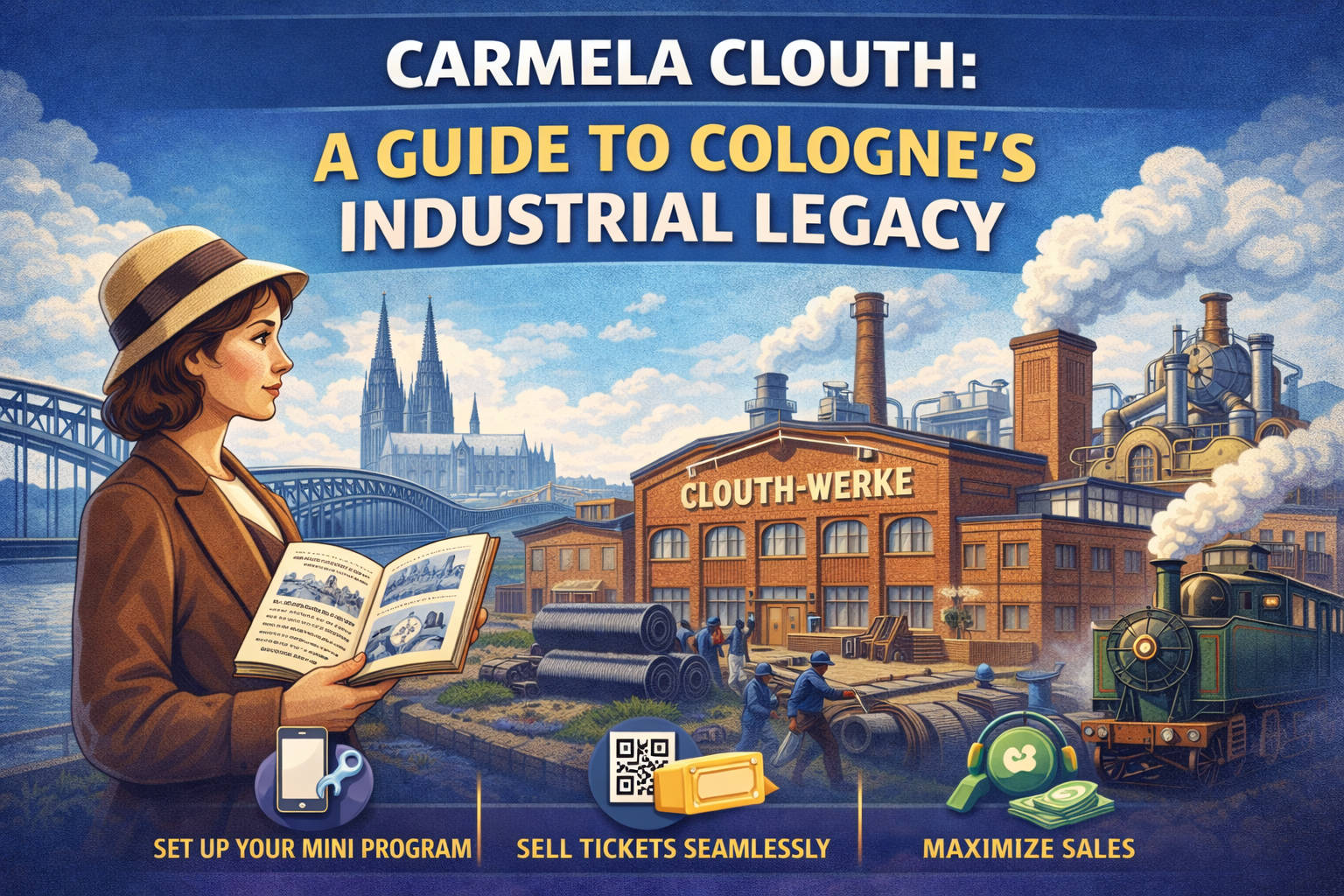
Carmela Clouth is a name deeply tied to the industrial heritage of Cologne, specifically the social and structural transformation of the Nippes district through the Clouth rubber dynasty.
In the heart of Cologne-Nippes, the red-brick walls of the old rubber works tell a story that goes far beyond manufacturing. While history books often focus on the gears and the gummi, the name Carmela Clouth represents the human side of this massive industrial machine. Understanding this legacy requires looking past the smoke stacks of the 19th century and looking at how a single family name redefined an entire urban neighborhood.
The Clouth story isn’t just about the past. It’s about a living, breathing part of Germany that has transitioned from heavy industry to one of the most sought-after residential areas in the country. Let’s look at why this name continues to resonate in 2026.
The History of the Clouth Dynasty
The Clouth family founded the Rheinische Gummiwarenfabrik in 1862, creating an industrial empire that supported thousands of families for over a century.
Franz Clouth, the patriarch, was a pioneer in rubber technology. He didn’t just make tires; he provided the components for the first transatlantic cables and parts for the pioneering Zeppelins. In practice, this meant the Clouth family was at the center of the global communications boom.
But a factory is more than its output. Carmela Clouth, within the family’s historical context, reflects the social commitment the family had toward their workers. During an era when most factory owners treated employees as mere numbers, the Clouths built “Werkswohnungen” (factory housing) and established a social network that kept the workforce loyal for generations.
Key Milestones in the Clouth Industrial Timeline
| Year | Milestone | Impact |
|---|---|---|
| 1862 | Founding of the Factory | Started the industrialization of Cologne-Nippes. |
| 1899 | Cable Production | Supplied the first underwater telegraph cables. |
| 1910 | Aviation Innovation | Produced skins for airships (Luftschiffe). |
| 2005 | Final Production | The factory closed, marking the end of an era. |
The Modern Transformation: The Clouth-Gelände
The former Clouth factory site has been converted into the Clouth-Gelände, a 14.5-hectare residential and creative quarter that blends historical preservation with modern living.
When the machines stopped in 2005, many feared the neighborhood would crumble. That didn’t happen. Instead, the City of Cologne launched a massive urban renewal project. Today, the Clouth-Gelände is a prime example of “land recycling.” It houses over 3,000 people and provides hundreds of jobs in the creative sectors.
In simple terms, they kept the “soul” of the place. The old Gate 4 and Hall 17 weren’t torn down. They were cleaned up and turned into studios and lofts. This is where the Carmela Clouth legacy feels most tangible. You can walk through the Luftschiff-Platz and feel the weight of history while sipping a latte at a local café.
Here’s why the Clouth Quarter works:
- Preserved Architecture: Original brickwork is integrated into every new building.
- Green Living: The site connects directly to Johannes-Giesberts-Park.
- Social Diversity: 30% of the housing is subsidized, ensuring a mix of different income levels.
The Hidden Truth: Why the Name “Carmela Clouth” is Trending
Beyond the physical buildings, the name Carmela Clouth has surfaced in digital circles as a point of cultural intrigue, blending historical reverence with a modern search for identity.
Let’s be honest: if you search for Carmela Clouth today, you might find a mix of historical records and modern digital footprints. Some of this is due to a “digital mystery” where AI-generated content has occasionally confused the Clouth name with other public figures. However, for those in Cologne, the name represents something more grounded.
Here is the “hidden truth” that most search results miss: The Clouth name isn’t just about the rubber factory. It’s about the Matriarchy of Industrialism. While the men were often the face of the business, the women of the Clouth family, like Carmela and Josefine, were the ones who navigated the social dynamics of the city. They were the ones who turned a “workplace” into a “community.”
Think of this like a classic vinyl record. The factory (the record player) is gone, but the music (the community spirit) is still playing. The modern Clouth Quarter is a physical manifestation of that enduring family influence.
How to Experience the Clouth Legacy Today
Visiting the Clouth district in Cologne-Nippes allows you to see the successful integration of 19th-century industrialism and 21st-century urban design.
If you want to understand the impact of Carmela Clouth and her family, you have to go to Nippes. It isn’t a museum; it’s a living neighborhood. For example, if you start at the Niehler Straße entrance, you can follow the “Clouth Trail.”
Steps to Navigating the Clouth Quarter
- Start at Tor 4 (Gate 4): This is the iconic entrance. It serves as a reminder of the thousands of workers who walked through these gates every morning.
- Visit Luftschiff-Platz: This massive open square is the heart of the district. It’s 60 meters wide and pays tribute to the airship production of the early 1900s.
- Explore Hall 17: This is where the old meets the new. It’s a listed building that now holds high-end apartments and commercial spaces.
- Walk to Josefine-Clouth-Straße: Named after the family matriarch, this street represents the residential focus of the new quarter.
As a result of this careful planning, the area doesn’t feel like a sterile new development. It feels like a continuation of a story that started over 150 years ago.
Why the Clouth Blueprint is a World-Class Example
The redevelopment of the Clouth site serves as a blueprint for urban planners worldwide because it prioritizes community over pure profit.
Most developers would have bulldozed the old factory to make room for more glass towers. The Clouth project did the opposite. They realized that the “brand” of the neighborhood was the history itself. In practice, this means that a brick from 1890 has more value than a glass pane from 2024.
For instance, the “Clouth Spirit” is maintained through:
- Baugemeinschaften (Building Groups): Groups of private individuals were allowed to buy land and build their own custom homes, rather than giving everything to big corporations.
- Artist Studios: Large sections of the old factory are reserved for artists, ensuring that Nippes stays creative and doesn’t just become a “dormitory” for workers.
This approach has moved the needle for urban design in Germany. It proves that you can have high-density housing without losing the human scale.
A Final Look at the Clouth Identity
The name Carmela Clouth might appear in digital searches as a mystery, but its real value is found in the physical reality of Cologne. It is a name that bridges the gap between the industrial grit of the past and the sustainable life of the future. Whether you are an urban planner, a history buff, or someone looking for a new place to call home, the legacy of the Clouth family offers lessons in resilience and social responsibility.
Instead of looking at the Clouth Quarter as just another housing project, see it as a tribute to an era that valued craftsmanship and community. That is the true “Clouth” way.
Frequently Asked Questions
Who was Carmela Clouth?
Carmela Clouth is a figure associated with the famous Clouth industrial family in Cologne. While the factory was founded by Franz Clouth, the family name (including members like Josefine and Carmela) became a symbol of social-industrial progress in the Nippes district.
What is the Clouth-Gelände?
The Clouth-Gelände is a 14.5-hectare urban redevelopment project in Cologne-Nippes. It was formerly the site of a rubber factory and is now a mixed-use neighborhood featuring residential lofts, parks, and creative workspaces.
Why is the name Clouth important in German history?
The Clouth family were pioneers in the 19th century. They produced the first transatlantic cables and the rubber skins for early Zeppelins. Their factory, the Rheinische Gummiwarenfabrik, was one of the largest employers in Cologne for over 100 years.
Can you visit the Clouth Quarter today?
Yes. The Clouth Quarter is a public residential area in Cologne. Visitors can explore historical landmarks like Hall 17 and Luftschiff-Platz, which have been preserved and integrated into the modern neighborhood design.