





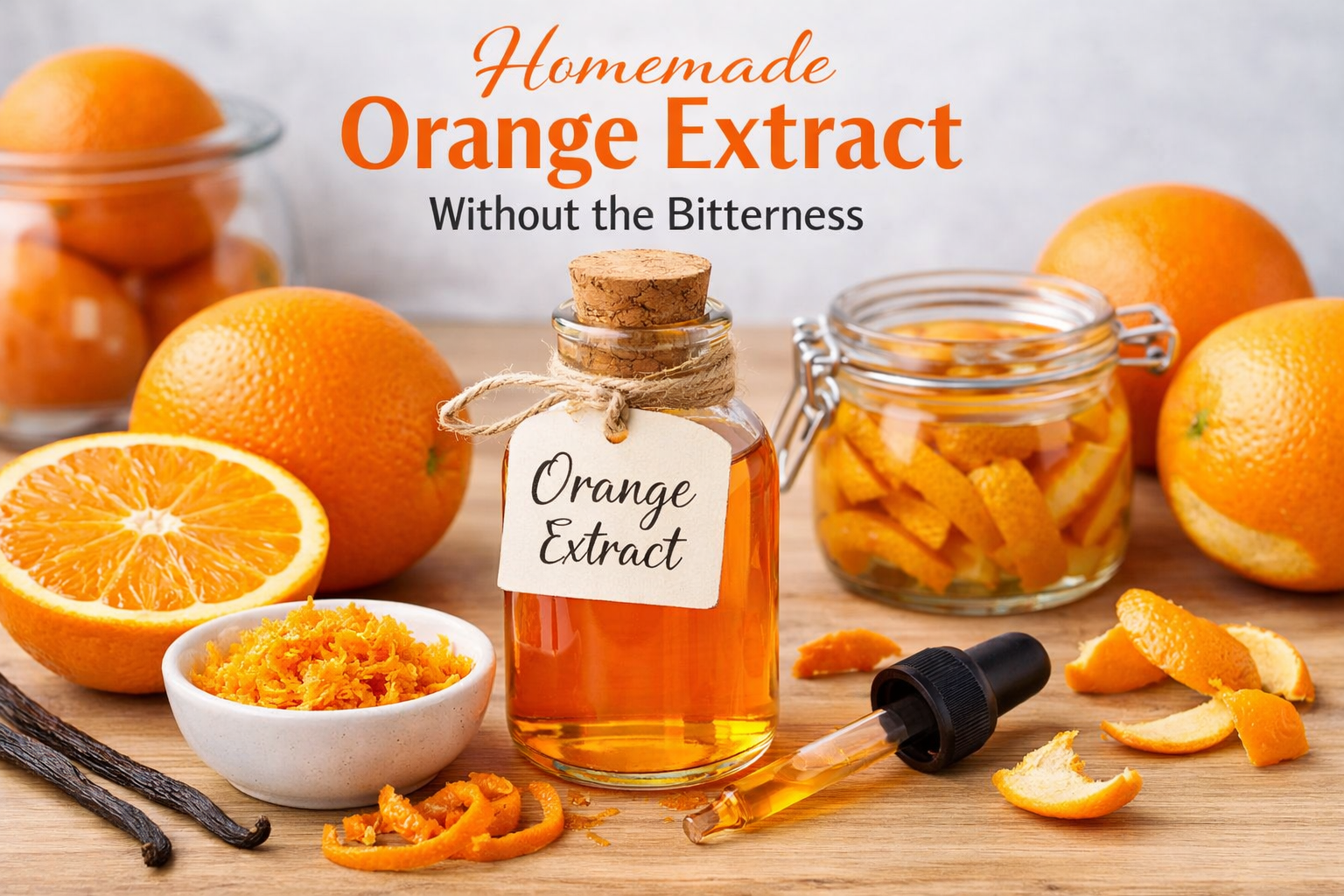
Most store-bought flavorings are little more than colored glycerin and synthetic chemicals, but a homemade orange extract allows you to capture the actual volatile oils of the fruit for a fraction of the cost. When you peel a fresh orange, that tiny puff of mist that hits your face is a collection of essential oils and terpenes. Capturing that “mist” in a bottle is the secret to professional-grade baking and mixology.
The Science of Solvent Extraction
Homemade orange extract relies on high-proof ethanol to dissolve and preserve the essential oils found in the citrus flavedo.
In practice, this is a game of chemistry. Alcohol acts as a solvent. It breaks down the cellular structure of the orange peel to pull out limonene, the primary compound responsible for that signature citrus scent. While many recipes suggest using any cheap vodka, the proof matters.
A 100-proof vodka (50% alcohol, 50% water) is often superior to a higher-proof grain alcohol because the water content helps extract water-soluble flavor components that pure alcohol might miss. Think of the alcohol as a magnet specifically tuned to pull the “bright” notes out of the skin. If you use a lower-quality solvent, you end up with a dull, flat flavor profile.
| Alcohol Type | Alcohol % | Best For |
|---|---|---|
| Standard Vodka | 40% (80 Proof) | General baking and clean finishes. |
| High-Proof Vodka | 50% (100 Proof) | Deep, complex extractions. |
| Bourbon/Brandy | 40% (80 Proof) | Holiday spices and heavy desserts. |
Choosing the Right Citrus for Your Extract
The variety of orange you select dictates whether your extract is sweet, floral, or bitter.
Let’s be honest: not all oranges are created equal. If you grab a standard Navel orange from the bin, you’re getting a workhorse, but you might miss out on the nuance of specialty breeds.
- Valencia Oranges: These are the gold standard for juicing and extracts because they have a high juice-to-peel quality and a very balanced sugar-to-acid ratio.
- Blood Oranges: These offer a raspberry-like undertone. Use these if you want an extract that feels “darker” and more sophisticated.
- Bergamot: If you want your kitchen to smell like Earl Grey tea, this is your target. It’s highly floral and very potent.
- Seville Oranges: These are bitter oranges. They are perfect for marmalade-style extracts where you want a “bite” to cut through sugary frosting.
Here is a tip that most people ignore: Always buy organic. Because you are soaking the outermost layer of the fruit in a solvent for weeks, any pesticides or wax coatings on the surface will end up in your finished product. If you can’t find organic, scrub the fruit with a vegetable brush and warm water to strip away the “food-grade” wax.
The “No-Pith” Precision Method
Removing the white pith is the most critical step to preventing your homemade orange extract from turning unpleasantly bitter.
The white, spongy layer between the skin and the fruit is called the albedo. In simple terms, it is the enemy of a good extract. It contains limonin and various tannins that, when soaked in alcohol, create a medicinal, astringent flavor that ruins a delicate sponge cake.
To get this right, use a sharp Y-peeler or a microplane. If you see white, you’ve gone too deep. You only want the “flavedo”—the vibrant orange top layer where the oil glands live. Here’s why this matters: the concentration of flavor is exponentially higher in the top millimeter of the skin. By excluding the pith, you ensure the alcohol only “grabs” the aromatic oils.
The Hidden Truth: Why Your Extract Might Fail
The common advice to store extract for six months is often counterproductive because citrus oils can oxidize and lose their “bright” top notes over time.
Most hobbyists think that longer is always better. That is a myth. While vanilla beans need months to break down, citrus oils are much more fragile. After about 4 to 6 weeks, you have usually hit the Saturation Point. This is the moment where the alcohol has absorbed as much oil as it can hold.
If you leave the peels in for three or four months, the flavor doesn’t get “stronger”—it gets “older.” The bright, zesty punch begins to mellow into a cooked-fruit flavor. In practice, you should taste your extract every week. Once it smells like a fresh-cut orange and has a deep amber color, strain out the solids.
Another hidden factor is light. UV rays act like a sledgehammer on citrus molecules. If you store your clear jar on a sunny windowsill, you’re essentially bleaching the flavor out of it. Always use amber glass bottles or keep your jars in a dark pantry. This preserves the “vibrancy” of the extract for up to a year.
Pro-Tips for Better Batching
Small adjustments in your technique can move the needle from a “hobbyist project” to a “professional ingredient.”
To truly flesh out the flavor, consider these three advanced techniques:
- The Double-Infusion: After 3 weeks, strain out the old peels and add a fresh batch of zest to the same alcohol. This doubles the oil concentration without increasing the liquid volume. It creates a “super-extract” that is incredibly potent.
- The Salt Trick: Add a tiny pinch of sea salt to your jar. It won’t make the extract salty, but it helps the alcohol break down the pectin in the peels faster, leading to a clearer, more intense liquid.
- Temperature Control: Don’t freeze your extract while it’s infusing. Cold temperatures slow down molecular movement. Keep it at a steady room temperature (around 70°F) to ensure the solvent works efficiently.
Frequently Asked Questions
Can I use dried orange peels instead of fresh?
Yes, but the flavor profile changes significantly. Dried peels have lost their volatile “bright” oils through evaporation. As a result, the extract will taste more like marmalade or candied ginger than a fresh orange. If you use dried peels, use half the amount required for fresh.
Why is my orange extract cloudy?
Cloudiness is usually a result of pectin or moisture. If you included too much pith or used a very low-proof alcohol, the water content can cause the oils to emulsify, creating a cloudy appearance. It is still safe to use, but straining it through a coffee filter can help clear it up.
How long does homemade orange extract last?
When stored in a cool, dark place, it lasts for 1 to 2 years. Because the alcohol content is high, it acts as a permanent preservative. However, for the best flavor, try to use it within 12 months before the citrus notes begin to fade.
Can I make this without alcohol?
In practice, you would need to use food-grade vegetable glycerin. This is called a “glycerite.” It is a good option for those avoiding alcohol, but keep in mind that glycerin is much sweeter and doesn’t extract the oils as efficiently as ethanol does.