





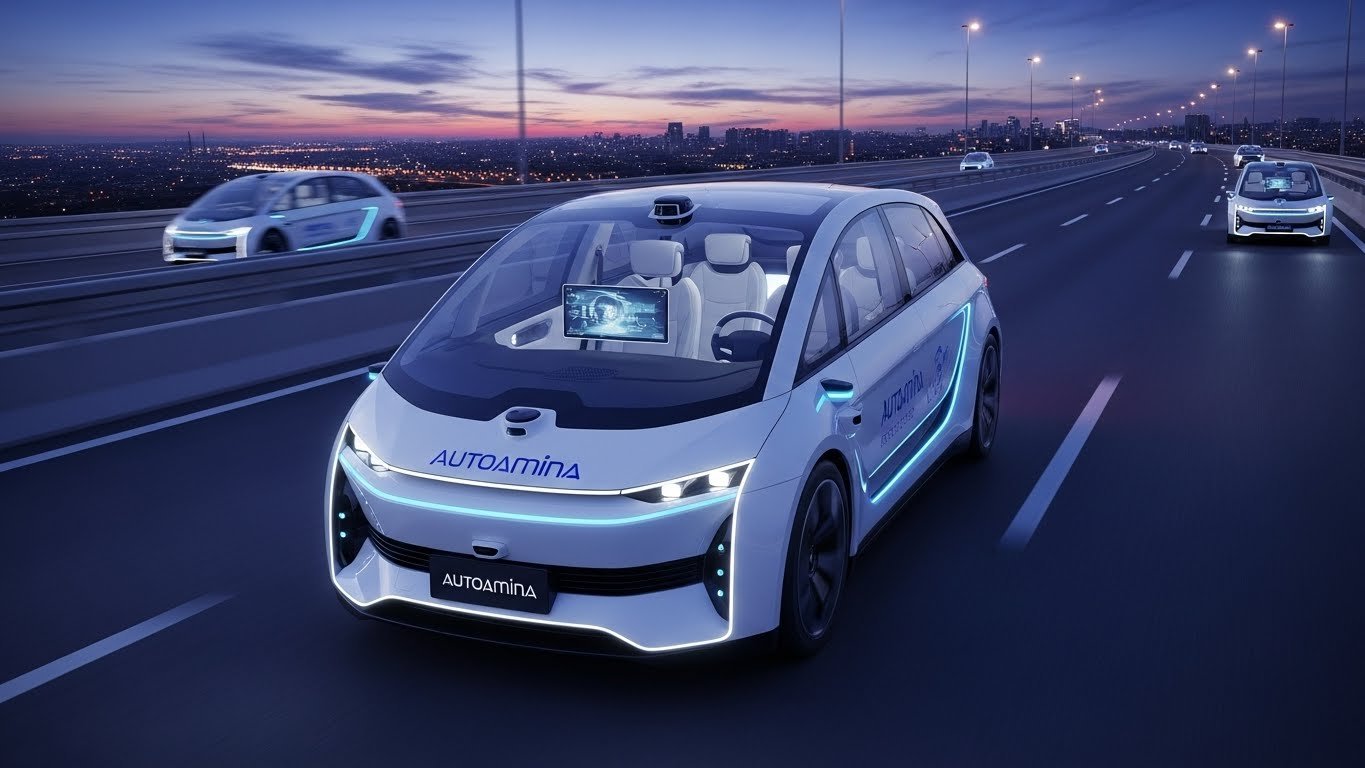
The world is on the brink of a transportation revolution. With technology advancing at lightning speed, autonomous vehicles Autoamina are no longer just a concept from sci-fi movies; they’re becoming an integral part of our reality. Imagine a future where cars drive themselves, navigating city streets and highways with precision while reducing congestion and accidents. This shift has the potential to transform not only how we travel but also how we live.
Among the many innovations in this space, stands out as a beacon of what’s possible in autonomous vehicle technology. But what exactly is Autoamina? How does it work? And why should you care about its implications for your daily commute or long road trips? Let’s dive into this fascinating topic to uncover the specifics and explore what makes different and perhaps even revolutionary for our society’s approach to transportation.
What is Autoamina and how does it work?
Autoamina represents a groundbreaking approach to autonomous vehicle technology. At its core, it merges advanced artificial intelligence with real-time data processing. This combination allows vehicles to understand their environment better than ever before.
The system utilizes a network of sensors, cameras, and LiDAR to gather information about surroundings. It then employs machine learning algorithms to interpret this data instantaneously. With Autoamina, cars can make informed decisions on the road.
What sets Autoamina apart is its ability to learn from each journey. The more it drives, the smarter it becomes. This adaptive learning curve enhances safety and efficiency over time.
Moreover, seamless communication between vehicles creates an ecosystem where they share insights instantly. This collaborative effort improves traffic flow and reduces accidents significantly. Transforming how we perceive transportation starts here with Autoamina’s innovative framework.
Advantages of Autoamina over traditional autonomous vehicle technology
Autoamina brings a fresh perspective to the realm of autonomous vehicles. Unlike traditional systems, it leverages advanced AI algorithms that adapt in real time to changing environments. This means safer navigation through complex urban settings.
The technology also emphasizes enhanced communication between vehicles and infrastructure. Autoamina allows cars to share data on traffic conditions, weather, and potential hazards instantly. This connectivity leads to more informed decision-making.
Moreover, energy efficiency is another standout feature. By optimizing driving patterns and routes based on live data, Autoamina reduces fuel consumption significantly compared to its predecessors.
User experience is also better with Autoamina’s intuitive interface. Passengers can easily customize their journey preferences, making every ride personal and enjoyable.
Potential challenges and concerns with implementing Autoamina in the automotive industry
Implementing Autoamina in the automotive industry presents several challenges. One significant concern is regulatory hurdles. Governments must establish guidelines and safety standards that keep pace with rapid technological advancements.
Another challenge lies in public acceptance. Many people still harbor doubts about trusting autonomous vehicles, particularly regarding safety and reliability. It will take time to overcome this skepticism.
Moreover, integrating Autoamina into existing infrastructures can be complex. Cities may need to upgrade roads, traffic signals, and other systems to accommodate advanced technology effectively.
Data security also poses a risk; hackers could exploit vulnerabilities within the system, threatening user privacy and safety. This necessitates robust cybersecurity measures.
There’s the economic aspect—manufacturers might face high costs during development and implementation phases, potentially leading to increased vehicle prices for consumers.
The future of Autoamina and its potential impact on transportation
The future of Autoamina holds exciting possibilities for transportation. With its advanced algorithms and adaptive learning capabilities, this innovative technology can redefine how we navigate our cities.
Imagine a world where traffic jams are minimized due to intelligent routing systems that adjust in real-time. Autoamina could allow vehicles to communicate with one another, streamlining traffic flow and reducing congestion.
Safety is another crucial advantage. The refined sensors and predictive analytics behind Autoamina can enhance decision-making on the road, potentially leading to fewer accidents and safer travel experiences for everyone.
Furthermore, as urban areas evolve, so will our need for flexible transportation solutions. Autoamina may pave the way for on-demand services tailored specifically to individual needs transforming public transport into an efficient network of autonomous vehicles that respond instantly.
This shift could not only reshape daily commutes but also influence urban planning itself as cities adapt infrastructure around these smart vehicles.
Case studies of companies using Autoamina technology
Several companies are already embracing Autoamina technology, showcasing its transformative potential. One notable example is a leading ride-sharing platform. By integrating Autoamina into their fleet, they’ve reduced operational costs while enhancing passenger safety. Real-time data analysis allows vehicles to make split-second decisions that improve overall efficiency.
Another case involves an automotive giant testing Autoamina in urban settings. Their pilot program has demonstrated smoother traffic flow and fewer accidents, thanks to advanced algorithms that optimize route navigation.
A logistics company is utilizing Autoamina for last-mile delivery services. The results? Quicker deliveries and lower emissions, proving that sustainability can go hand-in-hand with innovation.
Each of these examples highlights how diverse industries are leveraging the capabilities of Autoamina to rethink transportation as we know it.
The potential for Autoamina to revolutionize the transportation industry and improve our daily lives
Autoamina has the potential to reshape how we think about transportation. Imagine a world where vehicles communicate seamlessly with one another, reducing traffic jams and enhancing safety on our roads.
With its advanced algorithms, Autoamina can analyze real-time data from various sources. This capability leads to smarter route planning and more efficient energy use in vehicles.
Moreover, it promises increased accessibility for those unable to drive. Autonomous transport options could bridge gaps in mobility for the elderly and disabled, making daily life easier.
Environmental benefits are also significant. By optimizing driving patterns and reducing emissions, Autoamina contributes toward cleaner air quality.
As cities evolve into smart environments, integrating Autoamina technology can streamline urban logistics. Deliveries become faster while minimizing congestion in busy areas. This innovation is not just about convenience; it’s about creating a sustainable future that enhances our everyday experiences on the move.
Conclusion
The world of transportation is on the brink of a significant transformation. Autoamina stands at the forefront, promising to redefine how we think about autonomous vehicles. By leveraging cutting-edge technology and advanced algorithms, Autoamina has the potential to address many current limitations seen in traditional systems.
As companies begin to adopt this innovative approach, we may witness not just enhanced safety but also greater efficiency in our daily commutes. With fewer accidents and reduced traffic congestion, cities could become more livable spaces.
Moreover, as public trust grows in these technologies, its adoption will likely accelerate further opening doors for entirely new models of car ownership and mobility services.
Autoamina isn’t merely an upgrade; it’s a paradigm shift that could enhance our quality of life while reshaping urban landscapes around us. The future looks bright for both consumers and businesses willing to embrace this groundbreaking technology.